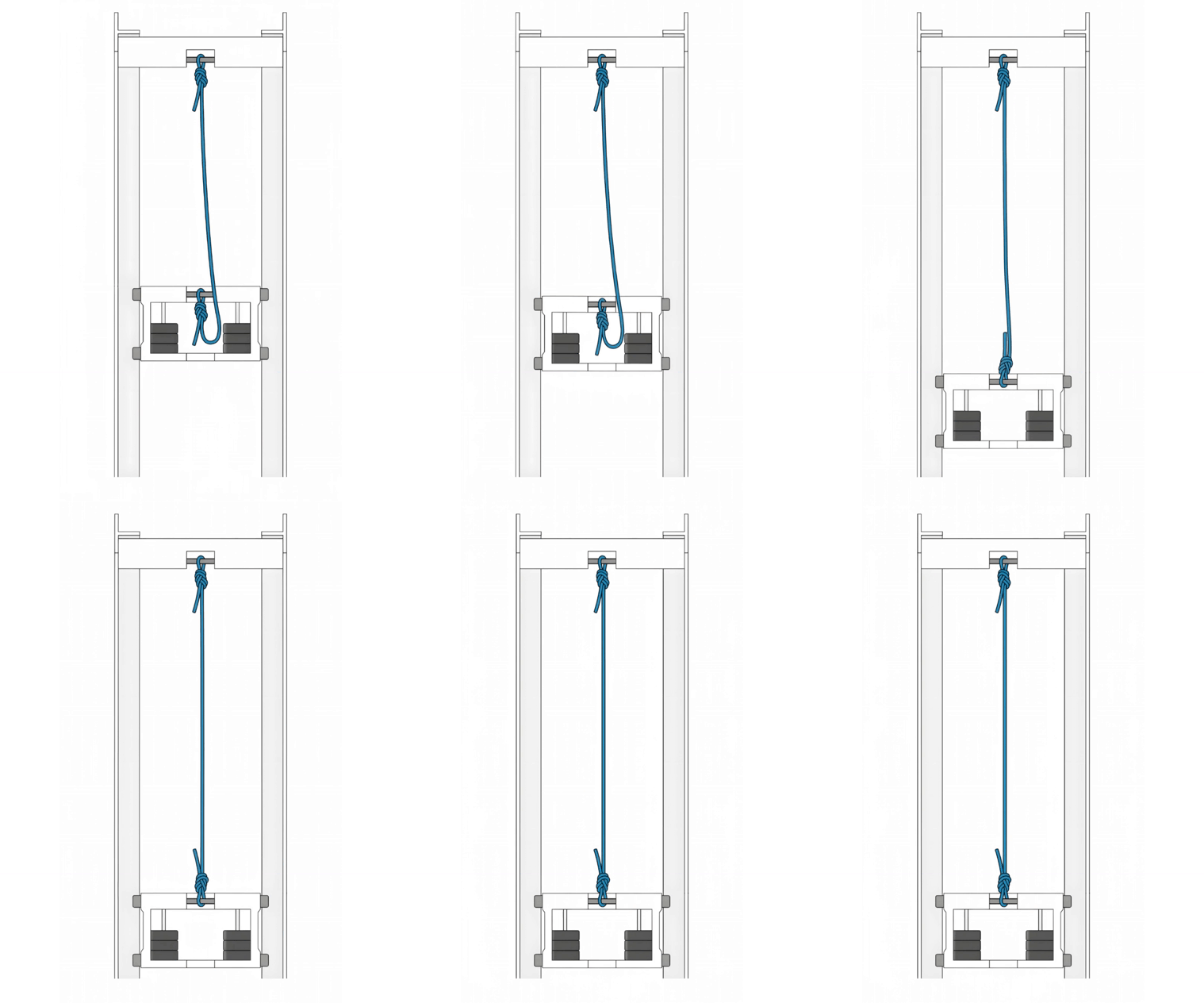
At the end of 2025, the International Climbing and Mountaineering Federation introduced UIAA-110 — a new standard regulating the quality of static ropes.
Which means we now have not 3, but 4 classes of climbing ropes:
UIAA 101 | EN 892: Dynamic ropes
UIAA 102 | EN 564: Accessory cords
UIAA 107 | EN 1891: Low-stretch ropes (aka semi-static)
UIAA 110: Static ropes⠀
*Concise summaries of each standard are available in my standards table.
__________________________
According to the explanatory note, the new standard is intended to bridge the gap between:
a) low-stretch ropes with diameters of 8.5–16 mm, elongation up to 5%, and minimum strength of 22 kN (Type A) and 18 kN (Type B; for full requirements, please refer to bikulov.net/en-1891); and
b) accessory cords with diameters of 4–8 mm and minimum strengths of 3.2 kN and 12.8 kN respectively.
This distinction currently leads to a situation where many high-performance and exceptionally strong ropes end up in the traditionally underrated accessory-cord category (think of the Petzl “Rad Line”), simply because they are thinner than the 8.5 mm required for “full-size” certification or because their low elongation makes them a poor fit for standards built around shock absorption.
In Europe, this becomes a practical problem, because certification is mandatory for both work-at-height equipment and sports gear. If a rope does not fit an existing certification category, it may be difficult or impossible to market it for those uses — even if its actual performance is entirely sufficient for specific applications.
In the United States, by contrast, thin, superstatic and non-EN-certified ropes made of polyester (PET), para-aramid (PPTA), and polyethylene (HMPE) are widely and successfully used in rescue, rigging, canyoning, and other ultralight applications.
__________________________
So what does a “true static” rope require according to UIAA-110?
• Construction: kernmantle
• Static elongation at 150 kg: ≤ 2.5%
• Minimum breaking strength (without knots): ≥ 12 kN
• Minimum breaking strength with a figure-eight knot: ≥ 8 kN
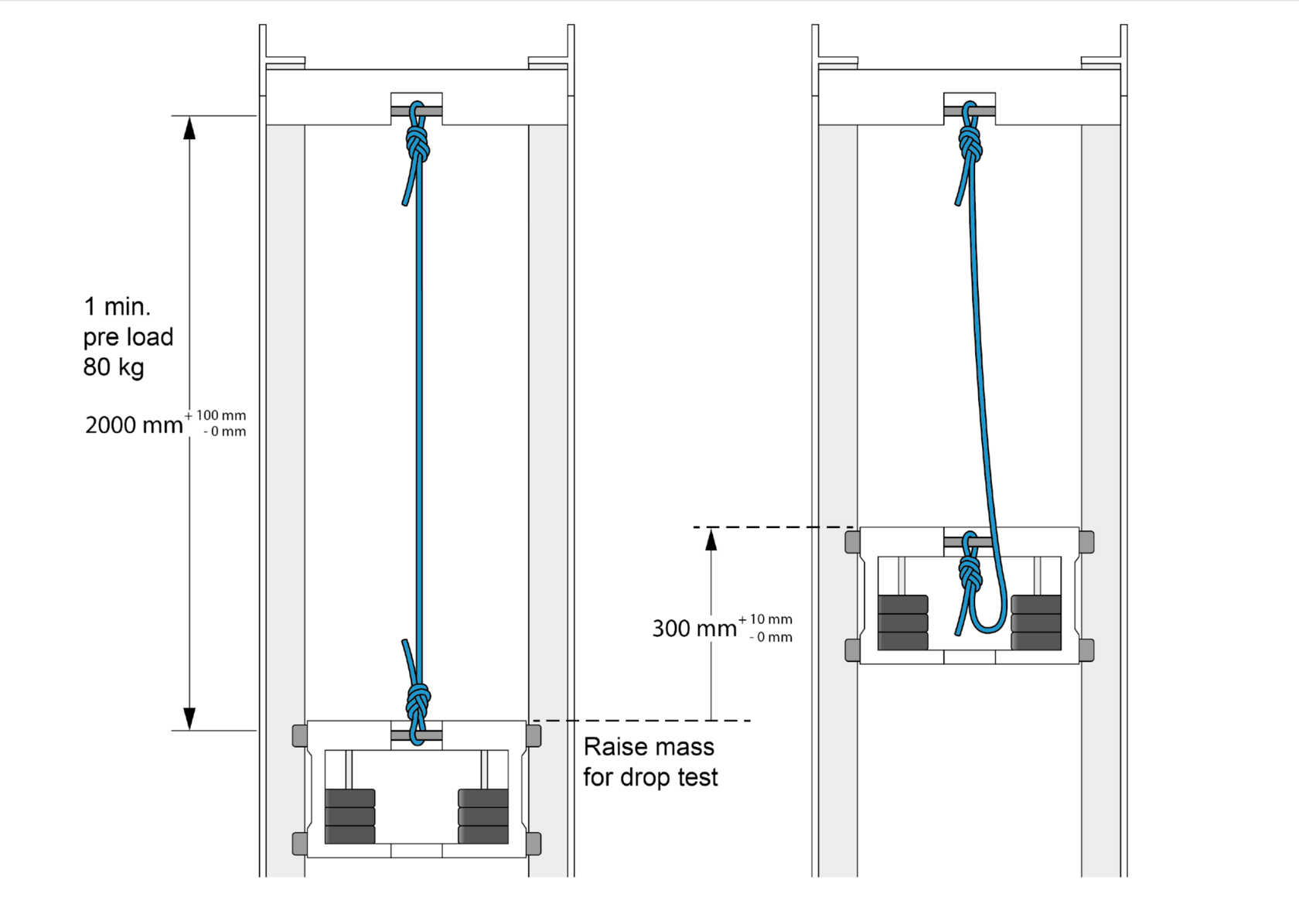
• The rope must withstand an 80 kg mass dropped at FF = 0.15 without breaking
• The sheath/core ratio and elongation at 250 kg must also be specified.
Which means we now have not 3, but 4 classes of climbing ropes:
UIAA 101 | EN 892: Dynamic ropes
UIAA 102 | EN 564: Accessory cords
UIAA 107 | EN 1891: Low-stretch ropes (aka semi-static)
UIAA 110: Static ropes⠀
*Concise summaries of each standard are available in my standards table.
__________________________
According to the explanatory note, the new standard is intended to bridge the gap between:
a) low-stretch ropes with diameters of 8.5–16 mm, elongation up to 5%, and minimum strength of 22 kN (Type A) and 18 kN (Type B; for full requirements, please refer to bikulov.net/en-1891); and
b) accessory cords with diameters of 4–8 mm and minimum strengths of 3.2 kN and 12.8 kN respectively.
This distinction currently leads to a situation where many high-performance and exceptionally strong ropes end up in the traditionally underrated accessory-cord category (think of the Petzl “Rad Line”), simply because they are thinner than the 8.5 mm required for “full-size” certification or because their low elongation makes them a poor fit for standards built around shock absorption.
In Europe, this becomes a practical problem, because certification is mandatory for both work-at-height equipment and sports gear. If a rope does not fit an existing certification category, it may be difficult or impossible to market it for those uses — even if its actual performance is entirely sufficient for specific applications.
In the United States, by contrast, thin, superstatic and non-EN-certified ropes made of polyester (PET), para-aramid (PPTA), and polyethylene (HMPE) are widely and successfully used in rescue, rigging, canyoning, and other ultralight applications.
__________________________
So what does a “true static” rope require according to UIAA-110?
• Construction: kernmantle
• Static elongation at 150 kg: ≤ 2.5%
• Minimum breaking strength (without knots): ≥ 12 kN
• Minimum breaking strength with a figure-eight knot: ≥ 8 kN
• The rope must withstand an 80 kg mass dropped at FF = 0.15 without breaking
• The sheath/core ratio and elongation at 250 kg must also be specified.
Meanwhile, diameter limits, sheath slippage, shrinkage, knotability, water resistance, dynamic elongation, and other parameters — are left outside the scope.
Interestingly, the UIAA considers 8 kN to be the “very minimum breaking strength for textile products to survive a ‘normal’ use, for example the peak force generated by an abrupt stop while abseiling.”
__________________________
In short, we now have one more reason to argue about terminology and to call people out for labeling low-stretch ropes as “static”;..;
Interestingly, the UIAA considers 8 kN to be the “very minimum breaking strength for textile products to survive a ‘normal’ use, for example the peak force generated by an abrupt stop while abseiling.”
__________________________
In short, we now have one more reason to argue about terminology and to call people out for labeling low-stretch ropes as “static”;..;
Image from: blacksheepadventuresports.com
