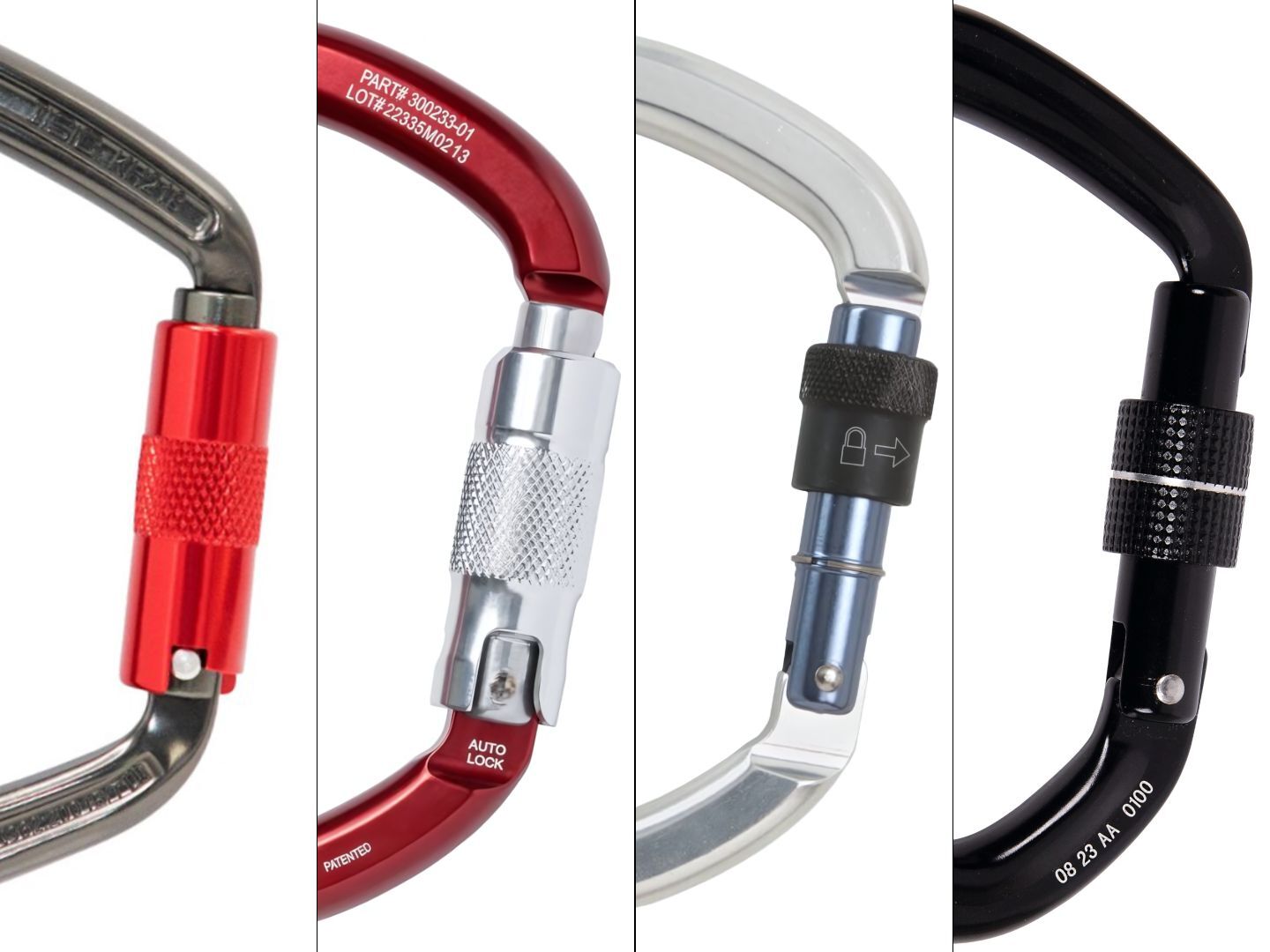
1. ISC “Aluminium Wizard Carabiner”
• Screw gate — 45 kN, 26 mm gate opening, 115 g
2. CMC “ProSeries Aluminium Carabiner”
• Screw gate — 44/13/14 kN, 28 mm, 142 g
• Auto-lock — 40/11/14 kN, 28 mm, 150 g
3. CAMP “Atlas”
• Lock — screw gate, 40/10/13 kN, 22 mm, 87 g
• 2-Lock / 3-Lock — auto-lock, 40/10/13 kN, 22 mm, 92 g
• Screw gate — 45 kN, 26 mm gate opening, 115 g
2. CMC “ProSeries Aluminium Carabiner”
• Screw gate — 44/13/14 kN, 28 mm, 142 g
• Auto-lock — 40/11/14 kN, 28 mm, 150 g
3. CAMP “Atlas”
• Lock — screw gate, 40/10/13 kN, 22 mm, 87 g
• 2-Lock / 3-Lock — auto-lock, 40/10/13 kN, 22 mm, 92 g
Curious Details
All of these options are 1.5–3 times lighter than steel models with comparable strength ratings.
- All of these carabiners are D-shaped — no surprise here, since this is the strongest carabiner shape.
- The first two are certified to the American rescue standard NFPA 2500 — formerly NFPA 1983 — which requires General Use carabiners, marked “G”, to withstand at least 40/11/11 kN.
All of these options are 1.5–3 times lighter than steel models with comparable strength ratings.
Why would anyone need such “monsters”?
- To reduce carabiner weight without sacrificing strength margin.
- To keep working loads farther from the carabiner’s ultimate strength — and potentially improve fatigue life under repeated loading.
- To extend the life of other aluminum gear — steel tends to chew up softer aluminum alloys much faster.
- For bragging rights.
