
More than a decade has passed since the French company Petzl introduced the climbing community to:
- CONNECT ADJUST — a range of adjustable personal belay lanyards for sport use; standards: EN 17520 and UIAA 109.
- PROGRESS ADJUST — a range of adjustable restraint and work-positioning lanyards for professional use; standards: EN 358.
And it was something of a revolution.
Before that, if you wanted to adjust the length of your cow’s tails, you had to tie friction hitches into them, rig a Purcell Prusik, or use things like the Kong SLYDE / KISA, which could be rather picky about rope diameter.
Then along came this neat little metal gizmo — the ADJUST rope adjuster — which suddenly let you shorten or lengthen a lanyard whenever you wanted, and, more importantly, do it quickly and conveniently: pull yourself closer to the anchor, fine-tune your position at the belay, and generally feel pretty cool next to everyone still using their “obsolete” DIY rope lanyards.
So in 2015, Petzl’s engineers once again came up with a clever piece of hardware that went on to have a major influence on climbing and work-at-height gear industry.
I have no idea what patent protection Petzl had around the original ADJUST, but the concept certainly didn’t remain exclusive for long. Today we have a huge number of ADJUST-style devices, copies, variations, and alternatives.
Sport:
Professional:
I have no idea what patent protection Petzl had around the original ADJUST, but the concept certainly didn’t remain exclusive for long. Today we have a huge number of ADJUST-style devices, copies, variations, and alternatives.
Sport:
- Edelrid SWITCH
- Beal EXPRESSO
- Fixe MANSO
- Climbing Technology TUNER
- Ocún SBEA
- Rock Empire PIP
- CAMP SWING
- Vento VECTOR V
Professional:
- Edelrid SWITCH PRO
- Skylotec TUNER PRO
- Rock Empire PIP STAND
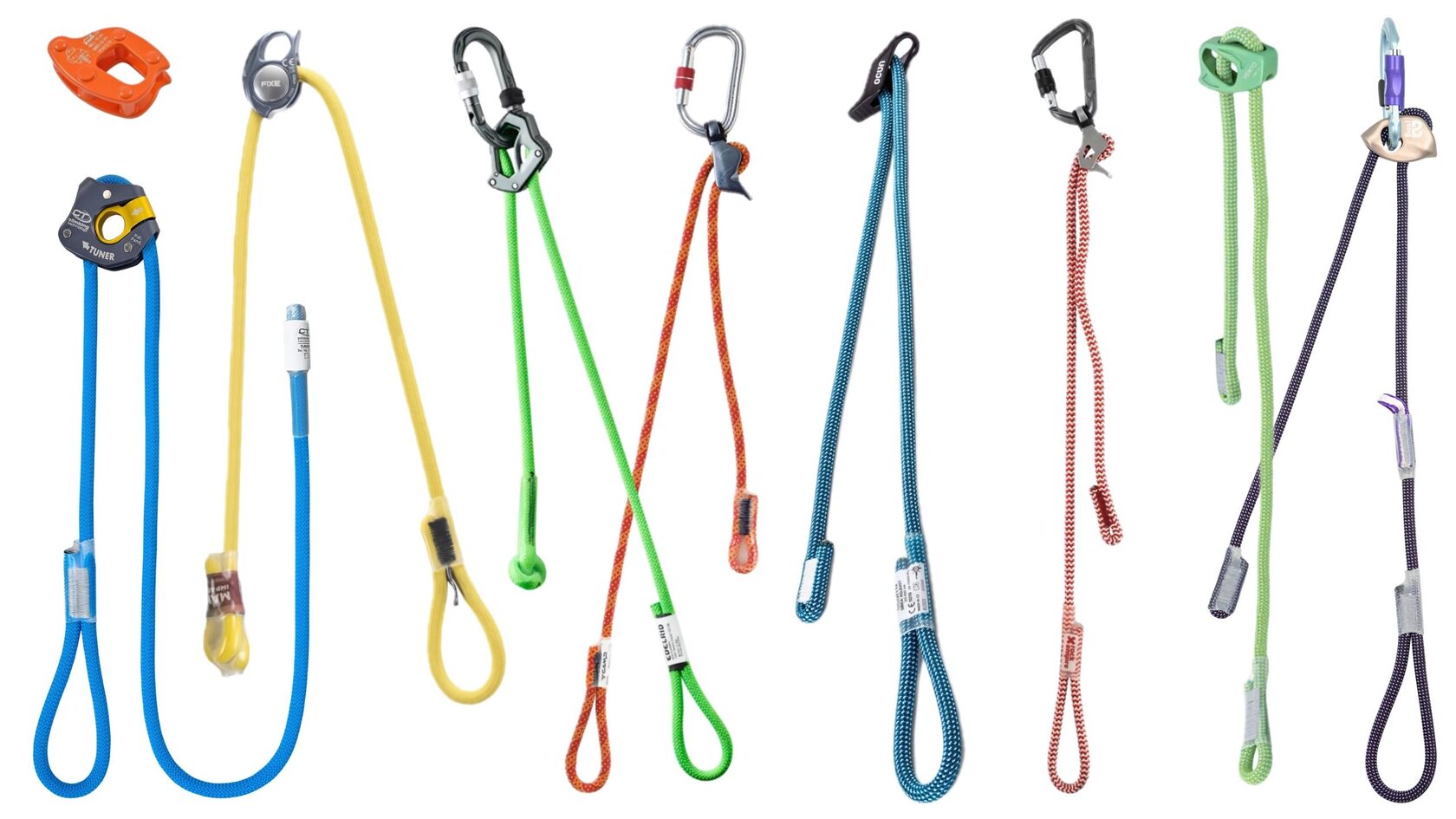
Like the original Petzl ADJUST lanyards, many of these come in several configurations: single-arm adjustable versions; twin-arm versions pairing one adjustable arm with a fixed short or long arm; and even versions with two adjustable arms, such as the Petzl DUAL EVOLV ADJUST, Rock Empire PIP STAND V, and the uncertified Skylotec TUNER PRO FLEX.
And they all differ.
Different rope diameters. Different adjuster geometries. Different adjustment feel and ease of release under load. Different weights. Different attachment interfaces.
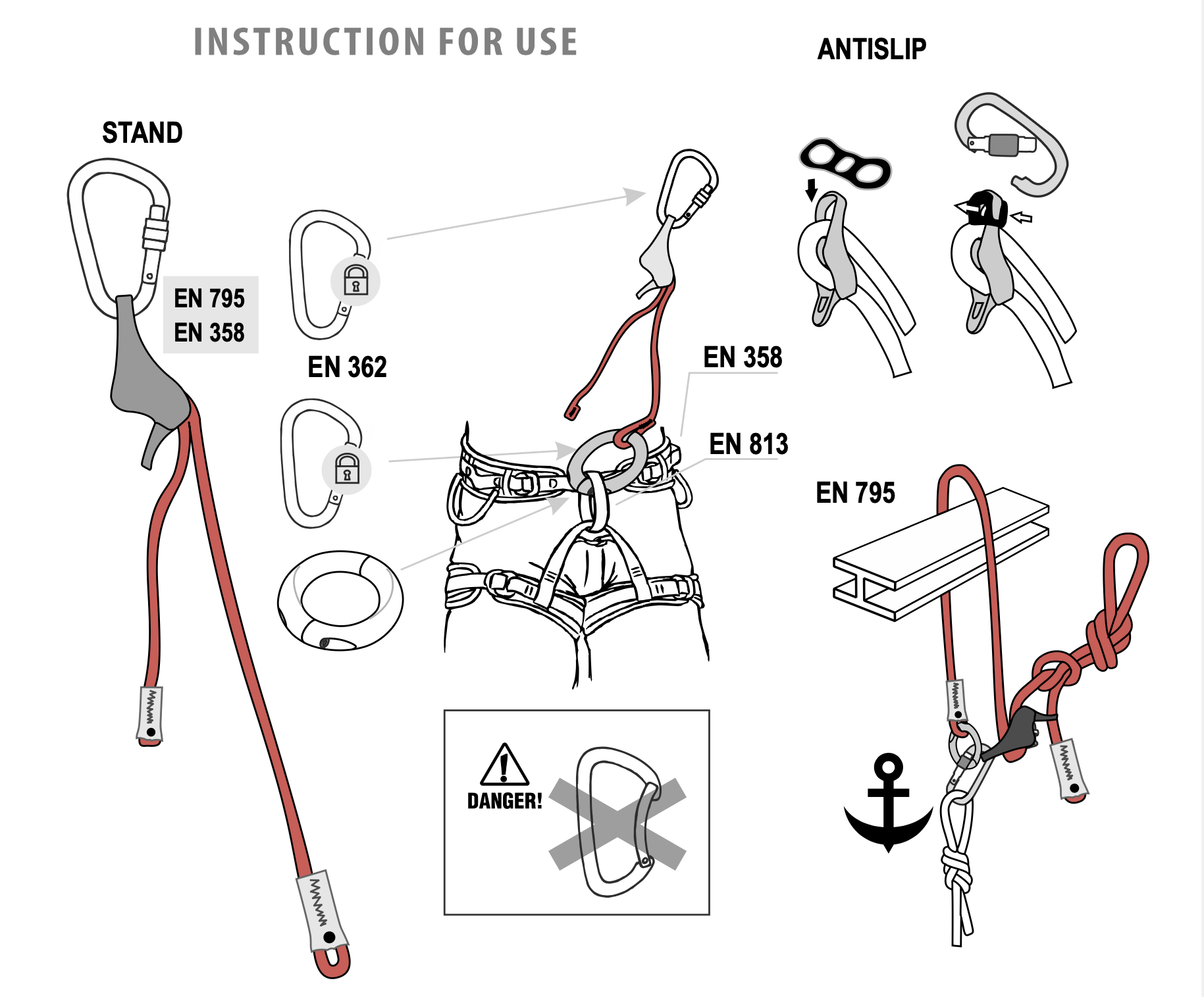
On sport-climbing lanyards, you usually get a large loop intended for girth-hitching the system to the harness. Industrial work-positioning lanyards tend to have smaller attachment eyes that accept a carabiner, quick link, or gated ring, or allow direct integration into the harness.
And, of course, the certification differs as well. Some of these lanyards, for example, can also be used as temporary anchor devices under under EN 795 Type B — such as the Skylotec TUNER PRO and Rock Empire PIP STAND — while others cannot.
For the end user, this kind of variety is obviously a good thing: more choice, more interesting designs, and more competition.
But now that bashing Petzl has somehow become fashionable — at least in Russian-speaking circles — it is sometimes worth remembering who helped get us where we are today. ☝️
_________________________________
The actual reason for this post, though, is the release of the updated, lighter CONNECT ADJUST (v. 2025), which brings several changes:
- The rope diameter has gone from 9.5 to 9.0 mm, and the ADJUST itself has been reworked, making length adjustment noticeably smoother.
- A hole for 4 mm accessory cord has been added. A small cord loop installed there can be used to feed rope through the adjuster more easily while the lanyard is weighted.
- The usual sewn termination at the end of the lanyard has been replaced by a stopper knot resembling a monkey’s fist.
- The harness attachment has been redesigned. Instead of the thick loop of main rope used on virtually all similar sport lanyards, the new CONNECT ADJUST uses an unusual sewn 12 mm HMPE webbing loop, intended to be girth-hitched directly to the belay loop of a sport-climbing harness.
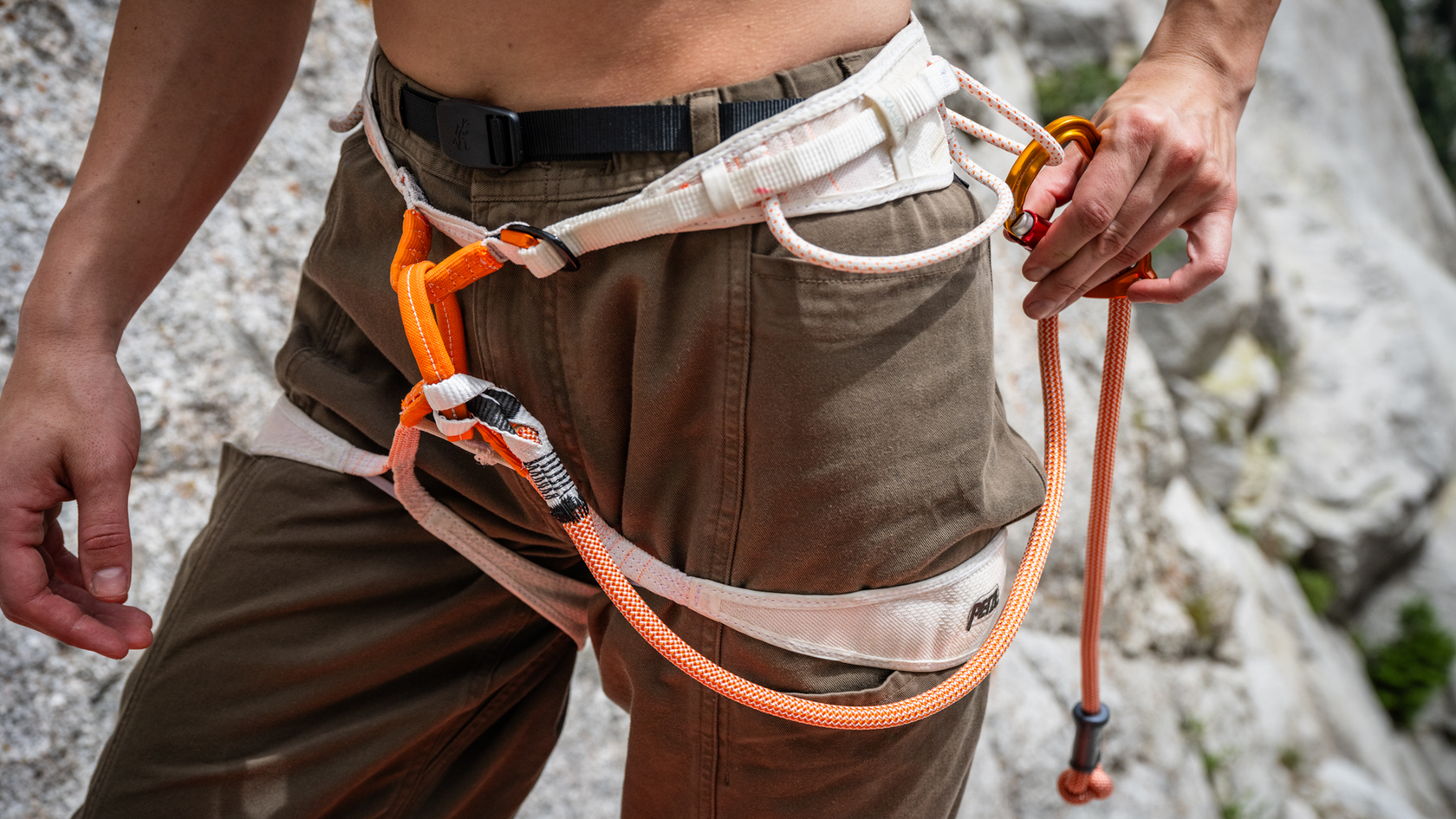
That last change is the one I find particularly interesting.
What do you think — will this design catch on? Ten years from now, will other manufacturers also be terminating dynamic-rope lanyards with sewn HMPE loops?
What do you think — will this design catch on? Ten years from now, will other manufacturers also be terminating dynamic-rope lanyards with sewn HMPE loops?
